Tag#readlogs
- 4 notes
Tag#readlogs
- 4 notes
Note 1September readlog! [note-0050]
- 10-01-2025
- noesis
- #readlogs
Note 1September readlog! [note-0050]
- 10-01-2025
- noesis
- #readlogs
1.1Moving to Tokyo. Flowers for Algernon. Medea. Chinese history. Epic exiles. Quantum chemistry.
1.1Moving to Tokyo. Flowers for Algernon. Medea. Chinese history. Epic exiles. Quantum chemistry.
Source: feralscholars.substack.com/p/september-readlog — noesis
Major update: I have moved to Tokyo and resumed university! There's all of a sudden time to just read for no reason and (thankfully) no more death threats. A huge thank you to all enthusiastic nerds who have funded my passion projects this month!
So here is a readlog! It contains: Flowers for Algernon. Medea commentary. Moving to Tokyo. Chinese history commentary. Quantum chemistry.
1.2Flowers for Algernon
1.2Flowers for Algernon

My rant on Goodreads:
Charlie's intelligence speedrun seemed like a direct manifestation of psychometrics and 1950s stage psychology potpourri!
First up, we have WISC! Consisting of: verbal intelligence — split into grammar and vocabulary, spatial intelligence — Charlie could see things with his mind's eye, working memory, as well as processing speed (not emphasized). Additionally we also had developments in interpersonal intelligence, intrapersonal intelligence, self awareness and regulation and so on.
Stage psychology theories were popular around the time of writing — 1959. It was funny to read it from 2025, when they are out of fashion!
There's Kohlberg's moral stages: When the pregnant woman was propositioning to Charlie in the park, he instinctively called her a degenerate (pre-conventional morality). The next time was when he saw a dull boy being bullied in a restaurant. Charlie subconsciously used the Golden rule (post-conventional morality). Later he also argued for his own rights in addition to means to an end as an experimental animal. Kohlberg developed his theories of morality in the late 1950s.
Look, we also have Piaget's stage theory:
Sensorimotor (seen as Charlie regresses near the end)
Pre-operational. Especially egocentrism as Charlie flips between first and third person for the first time.
Concrete operational. Reasoning about himself and the mouse, Algernon.
Formal operational... This is brutal
Alice rages at Charlie: "All I can do is listen and nod my head and pretend I understand all about cultural variants, and neo-Boulean [sic] mathematics, and post-symbolic logic, and I feel more and more stupid..."
Charlie, criticizing other academics. "Physics: nothing beyond the quantum theory of fields. Geology: nothing about geomorphology or stratigraphy or even petrology. Nothing about the micro- or macroeconomic theory. Little in mathematics beyond the elementary level of calculus of variations, and nothing at all about Banach algebra or Riemannian manifolds. It was the first inkling of the revelations that were in store for me this weekend. I couldn't stay at the party. I slipped away to walk and think this out. Frauds — both of them."
Minor note, I was expecting to see more of Dabrowski's overexcitabilities which were also developed in the late 1950s but they weren't explicitly applied. That was when the label "exceptionally gifted" was coined. I feel the author didn't seem to like giftedness labels. "[Dr Strauss] says [psychology books] will confuse me and make me think about psychological theories instead of about my own ideas and feelings."
Other topics. Charlie dissociated, particularly around women. "Even a feeble minded man wants to be like other men. A child may not know how to feed itself or what to eat, but it knows hunger." Why does the author like dissociation so much? Why do gender dysphoric people particularly love dissociative psychological horror?! Minds of Billy Milligan was also about DID. The way Charlie talked about relationships reminded me of Qiaochu Yuan archetypes, and I won't be one of them.
Fay, speaking to Charlie: "And boy did you act queer-I don't mean fairyish or anything like that but strange." Why did the author specifically used the word queer here?
Freudian jokes: "Does an idiot have an id"
I absolutely adored the narrative quality, however, considering it's 2025, I'm disappointed by the author's imagination. Just when the Charlie's intelligence approached near author levels, Charlie… regressed! To become intelligent and deteriorate again is like vector operation. Even I felt vicarious frustration when Charlie explains to his mom the intelligence changes. It definitely seemed like pre-planned rather than hypothesis-driven sci-fi, right?! "Algernon Gordon hypothesis" says you can artificially inflate intelligence but it must fall down later. If intellectual arc loses it's spark, then I'd expect emotional arc to be much stronger. There was a nice tripartite soul-like balance throughout. However, the falling action was a bit abrupt. But overall, highly rated.
1.3Pictures
1.3Pictures
1.4Some places I hung out at
1.4Some places I hung out at
-
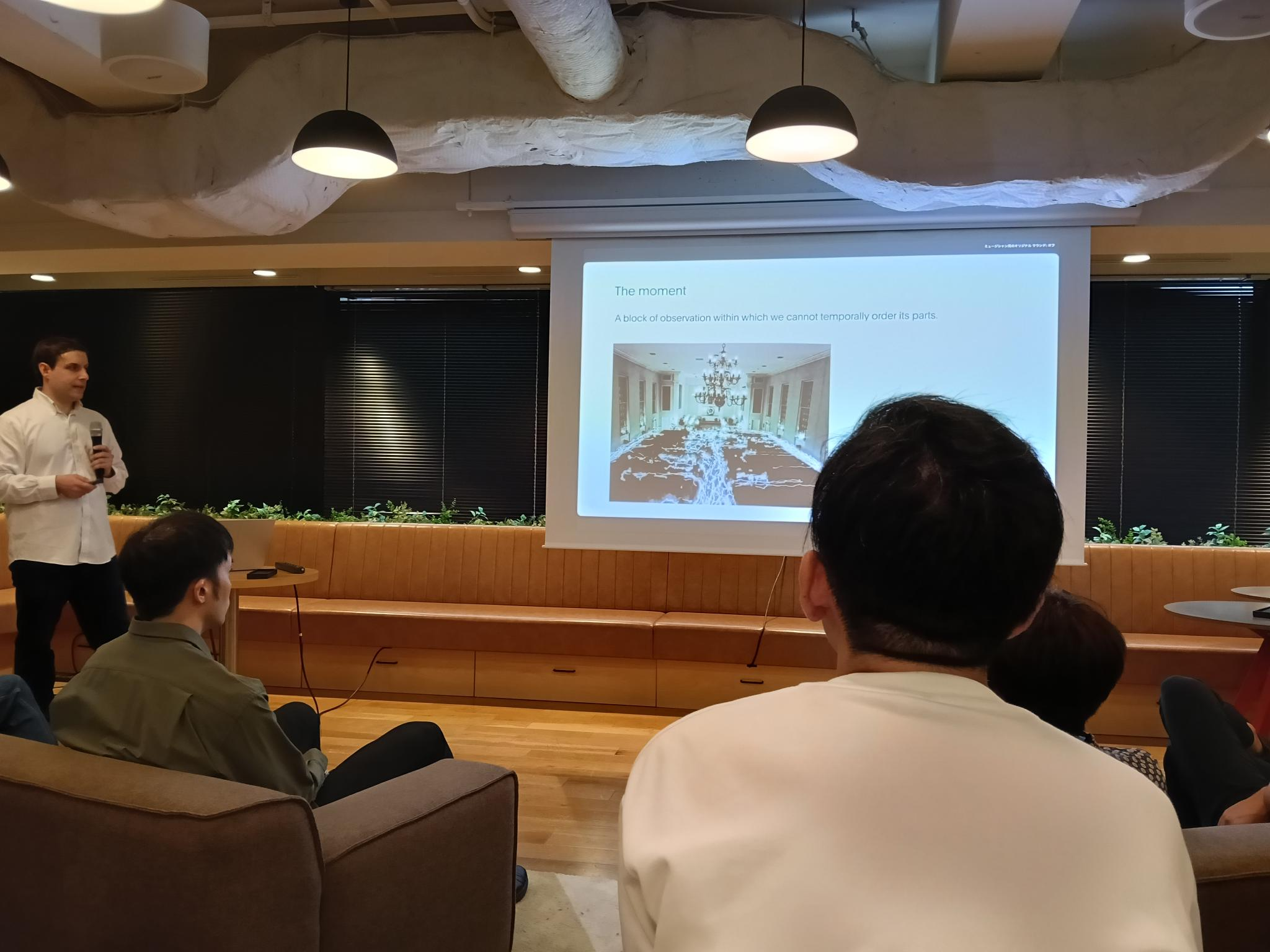
Consciousness club Tokyo — Max Hodak talked about consciousness for 1 hour. I'm not really sure I follow this reasoning especially intermediary steps.

There are some interesting papers:
-
Harajuku area — I appeared as Yamikawaii!
-
BioClub Tokyo — Bioenthusiasts can run experiments there for free!
-
Localhost Japan
1.5Ancient Chinese history: 夏 · 商 · 周
1.5Ancient Chinese history: 夏 · 商 · 周
Watching the earliest 夏,商,周 dynasties with dearest Adelaide!
Phrases I took note of:
三年不飞,飞将冲天,三年不鸣,鸣将惊人
i.e. If you don't fly for three years you're gonna soar! If you don't chirp in three years, everyone will be surprised!
It seems like in ancient China three years of silence is associated with brewing greatness! This contrasts a lot with the build in public culture on X, but arguably this is just stealth mode in ancient China.
春秋后期,社会上有这样一批人,他们有着高贵的世系、受过教育,可以被称作贵族,但却很贫穷,实际的社会处境和普通平民差不多,这样的破落贵族后裔组成了贫困的士阶层
i.e. In late Spring and Autumn period, there was a group of highly educated people "士阶层" with noble lineage, but these people are broke (do they resemble broke grad students?) Yet in two centuries, many Shi became high status.
伊尹 (Yi Yin), the legend that originated from a kitchen. 伊尹 was the primary intellectual behind overthrowing the Xia dynasty ruled by 夏桀 (Xia Jie). Xia dynasty is the first recorded dynasty which also engaged in slavery. 伊尹 was discovered twice in a kitchen which reminds me a bit of Eigenlucy.
Now I can complain in Chinese. I can just steal some Chinese literary containers to express my deep dissatisfaction, whereas, there's a lot more sarcasm in English before expressing anything!
1.6Epic exiles
1.6Epic exiles

Nowadays, many talented engineers and friends are being hurled out of the United States. But being exiled is the commonest thing in history, there's no need to panic. I looked at epic 10 exiles, calculated distance and clustered them.
One interesting cluster was Su Shi (苏轼) and Dante. Su Shi was exiled for writing satirical poetry about the ruler Wang Anshi's new policies. He complained how loans and state monopolies on salt superficially, helped farmers, but were practically abused by local officials to squeeze more revenue. He spent 12 years in exile and produced ~800 poems during the time. Dante was also a writer-activist type that was reported for corruption, exiled and wrote the Divine Comedy. Their works circulated among thin, regional networks and were memetic in themselves, and probably sounded cooler due to their status.
For Aristotle, he died 1 year after exile, there's not much original stuff. He just focused on docs, and having strong students extended his reputation for millenia.
The most disappointing exile was Ovid. During Augustus' moral reform encouraging righteous marriages, he wrote a … seduction handbook. And after he was exiled to the middle of nowhere Ovid continued to write laments. My guy! This doesn't really work!
1.7Medea
1.7Medea
Theme: talk is cheap
So now, am I a tiger, Scylla? — Hurl at me whatnames you please I I've reached your heart; and that is right. But Scylla still wins."
Creon, exiling Medea: "You're wasting words; you'll never make me change my mind!"
The janitor from the modern version of Medea: "She say, trouble with you Marta, you think words is worth something. But words ain't worth a thing. Words is just women's money, that's all. Only thing it buys you is scraps from the man's table."
Cynic's not-really-wisdom
During the argument Jason ironically expresses "I am sane now; but I was mad before". This sounds just like false cynic wisdom. When cynics pick us apart, we (especially young people!!) can mistake corrosion with care ... seek to be affirmed and, all of a sudden go up in flames! Am I falling am I sinking what the hell have I been thinking! Modern Medea rewrite pokes at this: "All that anger disguised as if wit was like sugar-coated hate."
Depressing quotes
Jason is a prisoner in a princess's bed; And Medea is in her room Melting her life away in tears; No word from any friend can give her comfort… She will not eat; she lies collapsed in agony, Dissolving the long hours in tears.
The dark cloud of her lamentations Is just beginning. Soon, I know, It will burst aflame as her anger rises. Deep in passion and unrelenting, What will she do now, stung with insult?
Medea gazing at her children:
Strong reason forces me to weep, old friend. The gods, And my own evil-hearted plots, have led to this. Dear sons, why are you staring at me so? You smile At me — your last smile: why? Myself? I won't do it. I won't think of it again. What is the matter with me? Are my enemies. To laugh at me? Am I to let them offscot free? I must steel myself to it. What a coward I am, Even tempting my own resolution with soft talk. Boys, go indoors.
1.8Quantum chemistry
1.8Quantum chemistry
I learned about some chemistry theories from the 20th century and ran an approximation technique on a few molecules. Namely, Hartree-Fock, which calculates molecular orbitals by treating all electron movements as one, averaged out electron, and also assume the nuclei being still. Then the computer tries to solve a 1-electron Schrodinger equation. They collapse the infinite dimensions onto a finite basis set, rewrite equation as a big sparse matrix and find some eigenvalues.
1.9Also
1.9Also
- Everybody has vertical and horizontal traits of their parents (paraphrased) by Lionel Wong
- 19 failed experiments by Breaking Taps
- arXiv RAG by me! quick 3-day hack I made for querying papers. Not deployed properly, so you can't. use. it.
Note 2October readlogs! [note-0039]
- 11-01-2025
- noesis
- #readlogs
Note 2October readlogs! [note-0039]
- 11-01-2025
- noesis
- #readlogs
Source: feralscholars.substack.com/p/october-readlog — noesis
Note. My writing is compressed from irl observations! Some of you complained it is too dense. So, I mass-deleted some long words. It could be fun to experiment with different tones.
2.1Science Agora
2.1Science Agora
We visited science agora (X thread).
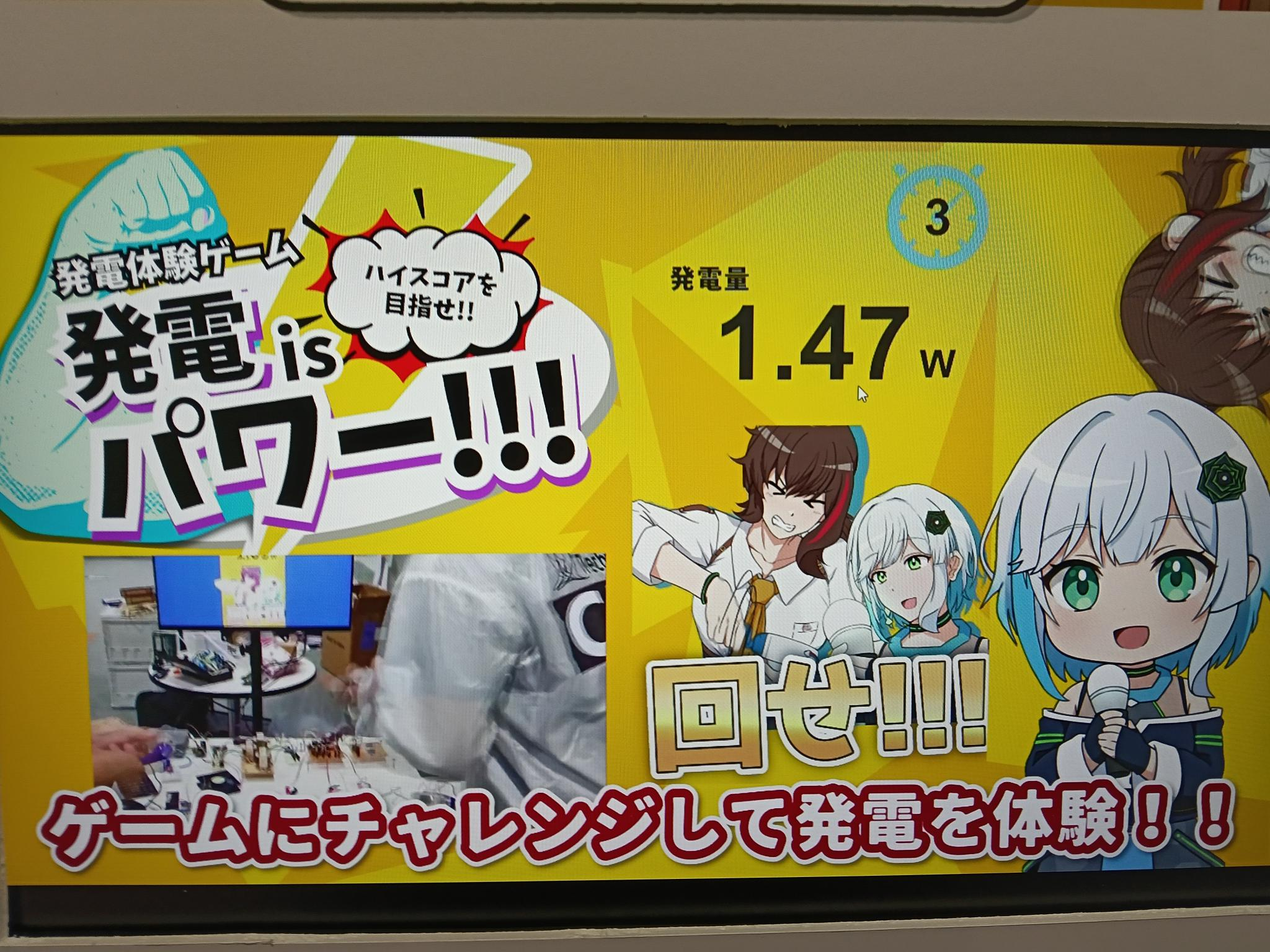
an electricity generator display
"Takeda cleanroom, cleanest air within the Yamanote line" doesn't this description read like a meme? Ja papers about Insect radio. pH strips but with photos and machine learning. Open source, local fluorescent microscope. Flexible ECoG array to avoid squishing your brain, etc. Japanese science builds on top of a basis with fine-grained novelty which seems to be established by American rough prototypes that have high impact directionally.
So on Fri, Xu Zheying was talking about Qwen models having the best stock investing abilities 🥳 and lots and lots of new exciting audio and images from Wan 2.5 flashed on the screen. There's no logical connection in his talk. I thought, Chinese tech seems to love thinking shortcuts as long as there is market validation, is uneven depth, and then jumps to scale.
Since both countries are researching neurotech, it will be interesting to see how the structures and methodologies differ; The Japanese government funds "Moonshot Internet of Brains" (timeline 2050) and there's International Center for Primate Brain Research in China that is focused on mapping.
German neurotech programs would be fun to compare too: Last month I noticed German science is often presented with less narratives but as is with a progression from first principles — Thinking about the "On Quantum Mechanics" paper by Max Born in 1924.
Curious to how people react when an experiment yields null results and how to deal with their latent learning progress? In startups, someone may be "not qualified" to join a team because they need "a lot of training". What is too much training in science. This reminds me, supervision often is related to happiness.
2.2Motivations across fields
2.2Motivations across fields
Quantum computing is often motivated as a natural progression from physics. See, problem-centric motivation for QC sounds unnatural: Need better drugs. Need more secure cryptography — argument not exclusive.
Compared to fusion, which is often more problem-centric.
Common fusion reasoning: We're building AI. Need more data centres. (Alternatively: trying to ascend the Kardashev scale). More energy demands. So, invest in fusion.
I wonder if due to this nature of motivation, there are more Chinese people working on fusion compared to QC, and the other way around in Germany.
2.3Tokyo tech events
2.3Tokyo tech events
Crypto is having its time in Japan! There are not a lot of public centralized tech events. There was the liquid AI hackathon, fully connected by W&B, robotics workshop, etc. I could find one or two good irl ones per week in Tokyo, though, need to learn more ja to understand the lectures — See Humanism in AI lecture, Sakana AI defense study events.
2.4Community- and document-level signals
2.4Community- and document-level signals
This paper talks about community and document-level signals. It says
Community-level. Strong papers are highly connected to the ecosystem. So, a heuristic would be to build co-occurrence graph from a paper's references, then, calculate connectivity and clustering coeffs. While playing around with this, one blocker was how existing citation layers like Semantic scholar or Open Alex restrict how fresh an input paper could be, and then, only shows related papers by their own similarity metrics rather than citations.
Document level. Sometimes, a paper, or even an article, may be full of jargon! Do the authors compress knowledgably or obfuscate? Given the German style of science, exposition clarity is not central to research quality! We may be able to check if authors know their stuff by if the text matches the ground truth in the ecosystem. Well hold up, if a field has no goals there is no ground truth … cope measurement should stay separate from narratives.
Also, detect red flags like tortured phrases, question marks. Don't forget about green flags.
2.5Parataxis, hypotaxis, and 阿Q
2.5Parataxis, hypotaxis, and 阿Q
Claude asks if I'm translating from Chinese as my prompts are too paratactic, just simple phrases piling up without conjunctions. I haven't thought about it, so I went on a rabbit hole. First I wrote every kindness a category error 1/2 in parataxis and in hypotaxis. e.g. "Garden roof, a fresnel plate."
Then I had a 30 min break where I binge read 阿Q正传. More zh-cn bookstores than en here anyway. The story set in the 1911 Xinhai revolution — ended the Qing dynasty — describes bay area psychological horror and most people having anxiety problems.
阿Q is a labour drifting between jobs, housing; He loves gambling and opium. Read: software engineers drifting between jobs, tryna find a group house in SF who also happen to pump memecoins and psychedelics.
阿Q's neither fully a villager or a townie, yet he hates both '条凳', '葱丝大头鱼' used by townies or '长凳' and '葱叶大头鱼' as endorsed by villagers. Read: "Not really a rationalist. Not entirely a biologist."
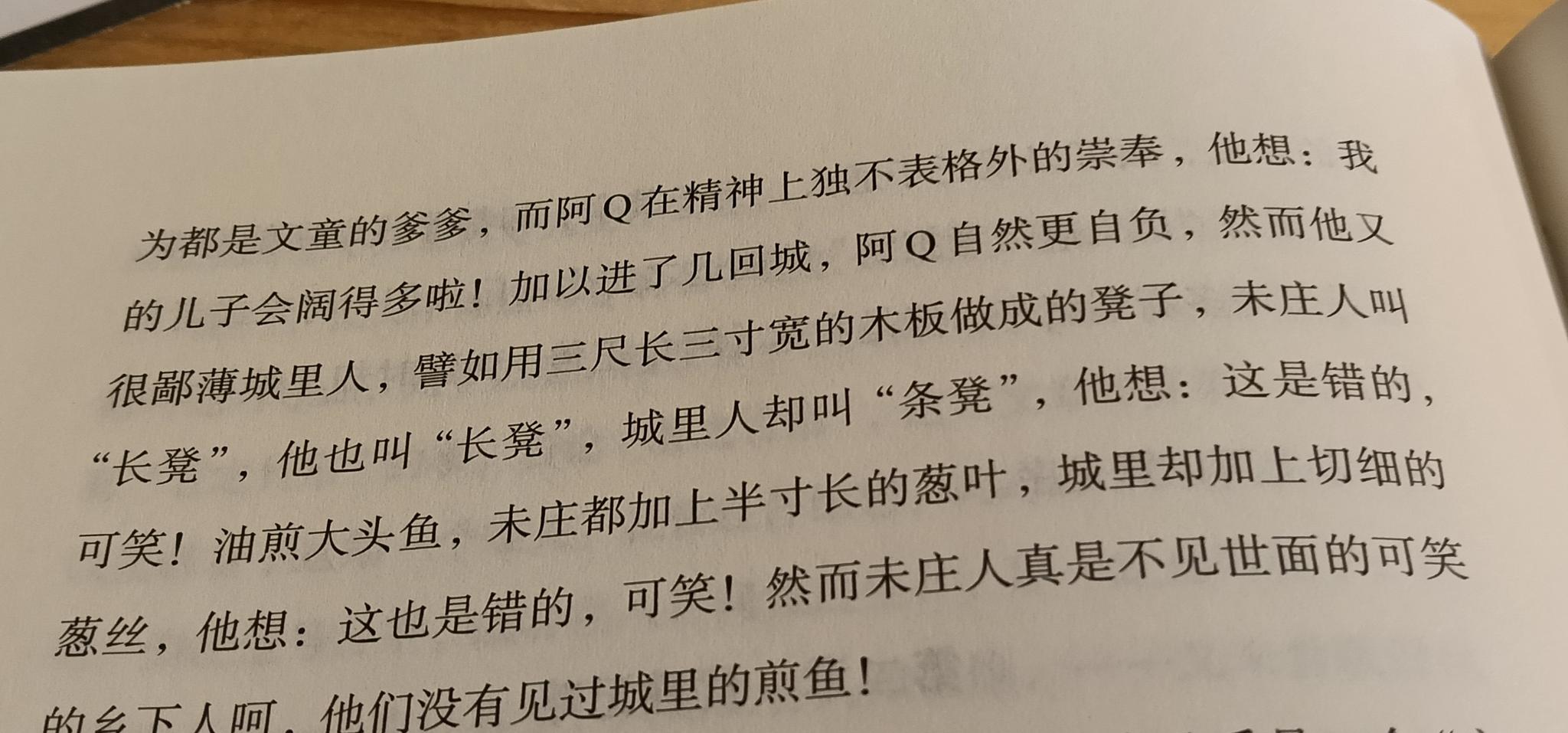
Similarities: Four or five distinct microtribes, the constantly high cortisol levels are similar. Differences: Present day, present time… And feedback loops are faster.
阿Q is determined to draw the best circle in his life, fails, ragequits and now believes only losers draw good circles. His 精神胜利法 maps to a reactively agency moment.
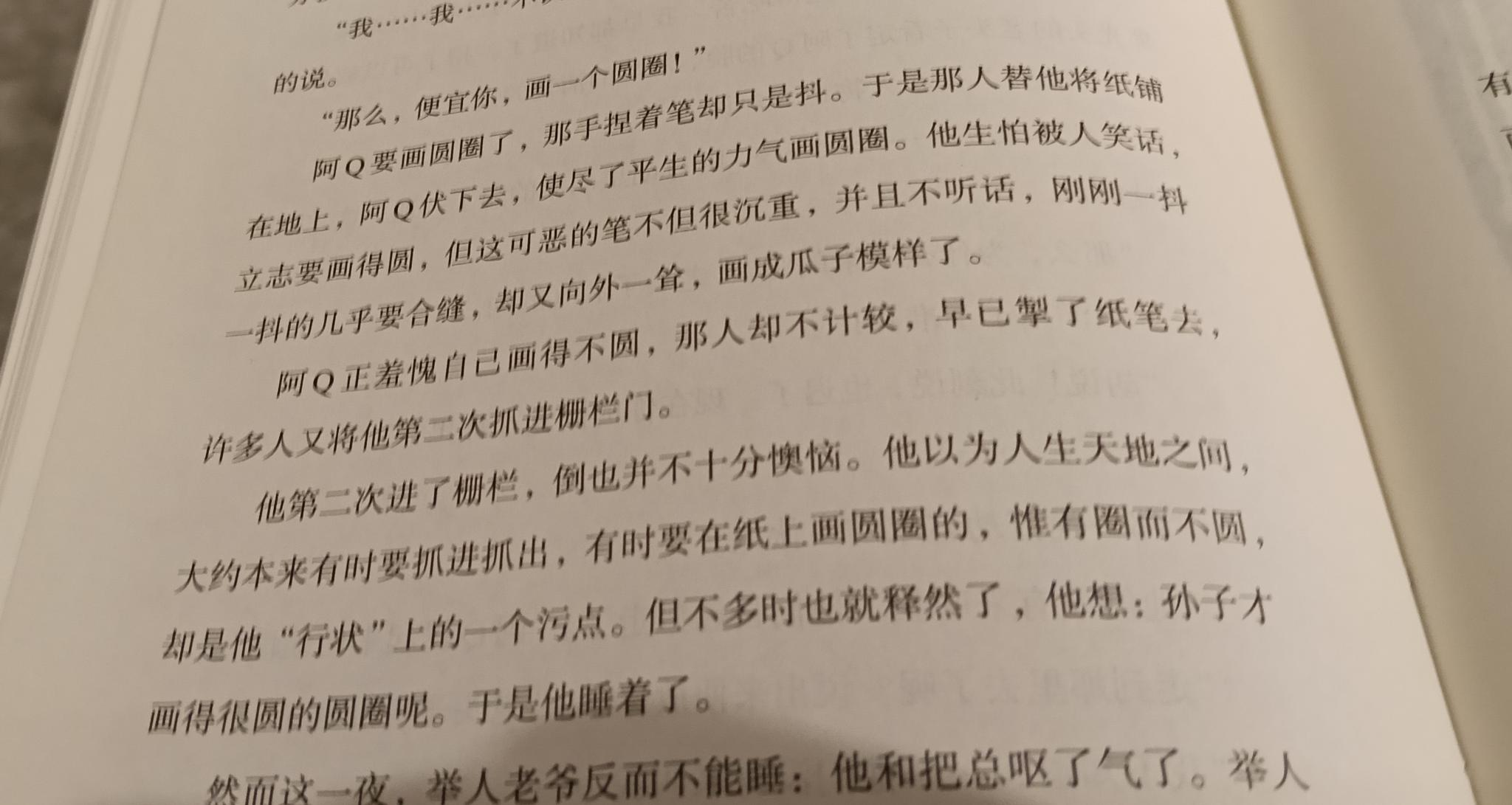
赵庄赵太爷 ~= an evil group house that welcomes people to crash with spare bean bags.
假洋鬼子: Soham, or, whoever is struggling with performance while overemployed, updating their resume headlines to match the specific job.
Just look at these epic paratactic sentences:
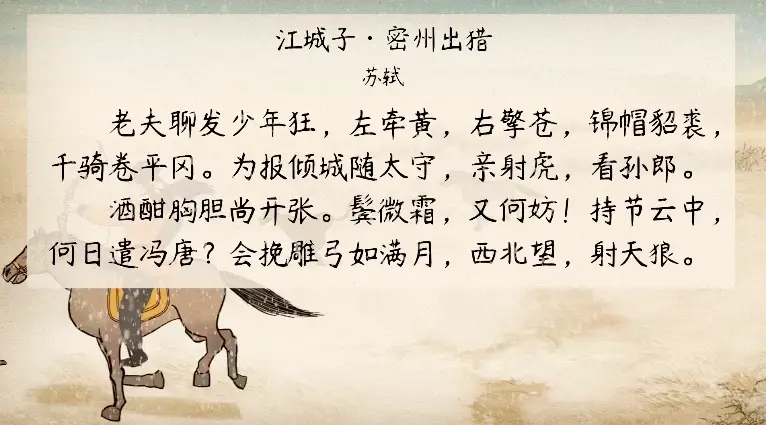
[subject + verb phrase A], [s+vp b] … [topic A], [topic B], no pronouns (how convenient) and no explicit links.
2.6Su Shi & cultural observations
2.6Su Shi & cultural observations
Su Shi asserts even at 45, his exile hasn't debilitated him. 2nd favourite is 丑奴儿·书博山道中壁 — Young people write melancholic sentences from void of experience, older people just haha, yeah, what a cool autumn.
Why do I talk about cultural observations so much? (1) modeling people of different cultures is an interesting thought exercise (2) mythology natively models the world micro/meso/macro without borrowing from STEM fields, which have massive blindspots and strikes non-STEM folks as inflexible. To be clear, I'm not excluding STEM models, but pick the right tool for the task. (3) belief systems that can stand time and cultural tests.
So, school: readjusting is okay now! It definitely seems like a future self made the decision and I'm coming to terms with it.
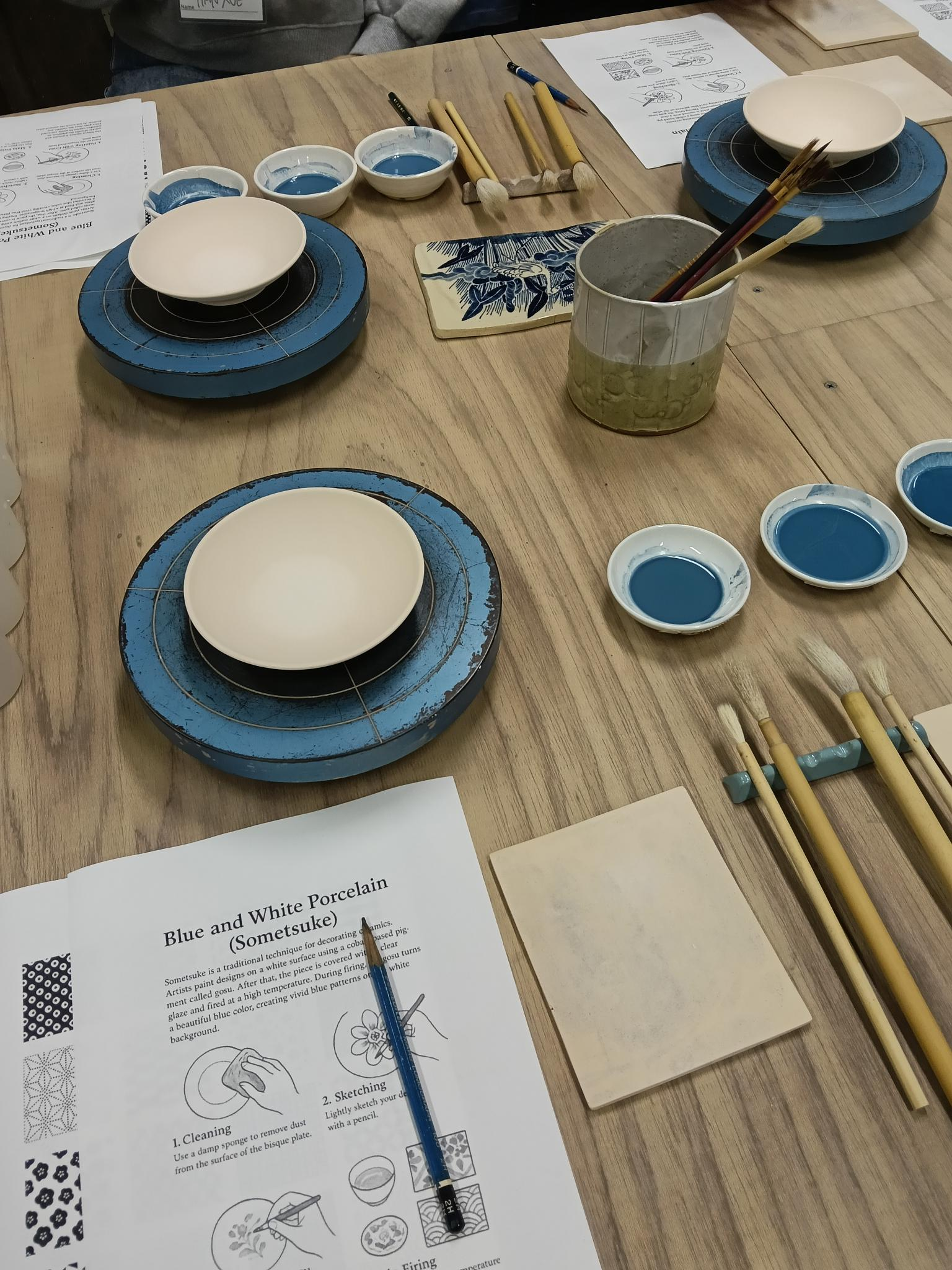
a ceramics workshop at Kogei SHS
Note 3November readlogs! [note-0038]
- 12-01-2025
- noesis
- #readlogs
Note 3November readlogs! [note-0038]
- 12-01-2025
- noesis
- #readlogs
Source: feralscholars.substack.com/p/november-readlogs — noesis
No analysis this time. Very tired and wrote this in 30 mins
3.1Liked
3.1Liked
- Chapter 8 from Hormone Hunters: The discovery of Adrenaline (highly rated)
- Winners don't use costly punishment
- Why is cognitive effort experienced as costly? — talks about opportunity costs, large information shifts and searching through rare brain states.
3.2Coal, energy, Kardashev
3.2Coal, energy, Kardashev
A friend and I were playing a Song dynasty simulator and we noticed coal was often but not always the limiting factor. Coal also shows up in:
-
1st industrial revolution. The James Watt steam engines burn coal with a magnificent thermal efficiency of 3%…
-
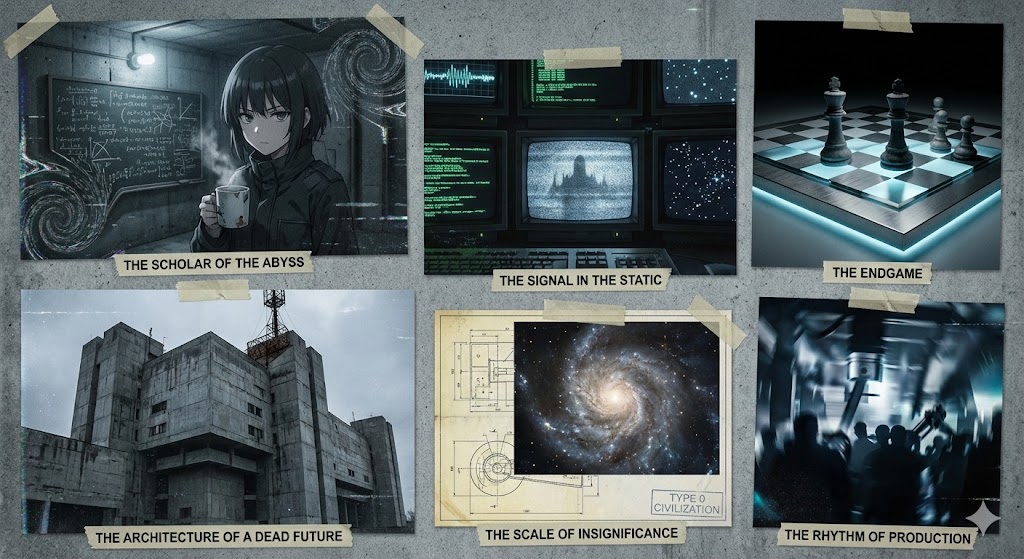
2nd industrial revolution. Steam engines are stacked with dynamos that convert mechanical energy into electrical energy in Pearl station in Manhattan. A 162x jump from steam engines. So I just placed them on a Kardashev scale. Vibes:
-
Nuclear. More steam engines, but replace coal with Uranium 235, keep water and add spinning turbines afterwards. The computer system "СКАЛА" — система контроля аппарата Ленинградской Атомной, lit. "rock" — is literally between Scylla (Xe-135 poisoning) and Charybdis (positive void coefficients) 🤔 Xe-135 started to accumulate in the fuel rods and the power decreased to 30 MW. So the control rods were removed in order to have more power, which surged to 200 MW. However at this point, there were so many steam bubbles that the reactor exploded. During the disaster it was estimated that reactor 4 surged to 3e10 W. Modernization, more production for raised standards in quality of life — health, education, welfare.
3.3Prolegomena to Omnipotence — roles in science
3.3Prolegomena to Omnipotence — roles in science
- The learner; the explainer. "A reader of a popular book is not going to take part in resolving them anyway, while an expert in a given theoretical discipline must first of all get to know its weapons and the configuration of its battlefield before he can himself participate in scientific councils of war, once he has learned the basics of muster and tactics."
- The benevolent observers, featuring the local babushka and the philosopher. "The elderly lady has much life experience, and she advises the girl, on the basis of [statistics] to dump the reckless boy. The philosopher knows the history of science and advises the physicists to give up on their theory because this theory is 'betraying' them."
- The designer, distinct from the babushka: "he becomes involved in action — as have the physicists… He is not a narrow pragmatist, like a builder who is constructing his house from bricks, uninterested in where these bricks came from and what they are, as long as the house gets built. The designer [knows and is interested about their] bricks — except for what they look like when no one is looking at them. He knows that properties belong to situations, not things."
3.4Other
3.4Other
30 years of dolphin research in shark bay! Dolphins form duos/trios, first order and second order alliances, partially because they have no consistent social group it is difficult to estimate a stranger dolphin's reputation.
Ontology of Childhood. Protagonist grows up, and slowly realizes they're in a prison. "But so what? The fact is that the world was not invented by people — no matter how clever they try to be, they are not capable of making the life of the last convict even slightly different from the life of the head of the supply unit. And what difference does the reason make, if the happiness produced by souls is identical? There is a quota of happiness allocated to a person in life, and whatever happens, this happiness cannot be taken away."
Uhlenbeck interview; When math branched from physics in history and came together. Theory-builders, thinking in linear guaranteed steps collaborating with intuitive people who reverse fill in the blanks backtracking in textbooks to understand lemmas. Powerspace and the bulk theorem!
3.5Shing-Tung Yau biography excerpt
3.5Shing-Tung Yau biography excerpt
I gladly accepted, planning to make several stops in Europe before going to Cambridge, as I'd also been invited to Paris, Rome, and Finland, where I'd be giving a talk at the International Congress of Mathematicians in Helsinki. Travel was difficult, however, because the British Consulate had recently taken my Hong Kong resident card, maintaining that I could not keep it now that I had a U.S. green card. In the process, I had become stateless. I was no longer a citizen of any country, although I was a legal resident of the United States. For this period of time, until I became a U.S. citizen in 1990, I was literally a man without a state, stuck between two countries and between two cultures. Traveling abroad, as a result, became a real nuisance. I had to use my "white card" to apply in advance to leave the United States, and if I did not follow the proper steps, I would not be allowed back in.
I could not secure a visa to get into Italy, so I had to cross Rome off my list this time, even though I paid an extra "fee" to the Italian consul, who said he'd take care of it (and didn't). The same thing happened the next time I was invited to Italy; I again paid the consul an extra fee, but still got no visa. On another occasion, Michael Atiyah invited me to give a talk in Wales before the London Mathematical Society. When I showed my white card at immigration control in London, they gave me a hard time.
"What is the purpose of your visit in the United Kingdom?" I was asked. I told them I was there for tourism. "Where do you plan to go?" I was then asked. Wales, I replied. "Why are you going to Wales," the border agent persisted, "since it's clearly not a good place for tourism?" The questions finally ceased when I explained that I was going to Wales with my good friend Nigel Hitchin, an esteemed professor at Oxford. That did the trick this time, though traveling with a white card caused me no shortage of headaches.
3.6Misc
3.6Misc
Spartacist uprising and the bottom-up creation of the Twelve Tables in Roman empire; No Spartacist uprisings in Spring and Autumn periods, evolved from morality to law creating top-down 《法经》。 崤山大战 where some people escape on a boat. Qin official brought forth a yellow horse, but ran just as well as the black horses. Archery competitions to show social status. Reminds me of duck hunting in Shogun Era. Vietnamese History "a princess fell in love with a foreign king, spilled national secrets, and country fell to China" mythos in 2nd century BCE. French colonization. Japanese colonization. The red scare. Vietnamese tunnels — do those residents not get insomnia — and snake tubes used in Vietnam war. Triumph of the villages networks. Credits to Minerva classmates.
East Japan Earthquake. Failure modes being normalcy bias, sometimes people think they're okay and don't evacuate. Other times sensors malfunctioned and predicted a 3 meter wave rather than a 10 meter one. Encountering a magnitude 6.8 Earthquake while studying Earthquakes is dizzyfying.
Introduction chapter from China the industrial revolution book is nice, goes from rational self-interest theories to industrial revolutions to Soviet technocracy; People in control were technical. "there is no such thing as ethos over physics in an industrial setting."
Grothendieck exile. This translation is better "looking at things with your own eyes". Shifting between masculine and feminine selves (2.18 The child and the Mother from a more rambley translation that keeps the gender discussion). Ovid invents Iphis, born as a girl, becomes a boy, marries the woman he loves. Remember? he's the not-so-epic exile in history. Christine de Pisan's dysphoria speedrun and reinterprets the story as pro-woman in the Book of the City of Ladies. Other writers don't endorse androgyny as fusion.
Note 4Early may observelog! [note-0015]
- 05-15-2026
- noesis
- #readlogs
Note 4Early may observelog! [note-0015]
- 05-15-2026
- noesis
- #readlogs
Source: feralscholars.substack.com/p/early-may-observelog — noesis
Which took place at the Lucas Center and also the Koret community neurosciences lab.
4.1Study setup basics
4.1Study setup basics
In most studies, the resting state data is first collected through fMRI and MRI.
At the MRI scanning facility…
When I lied in the MRI machine, I heard 5 different octaves which performed a T1 echo sequence. My brain was not visibly different from most brains by rough inspection. I wondered about the white matter to gray matter ratios, especially in trans individuals.
study #2's setup
study #2: preparing the hair and ultrasound transducer
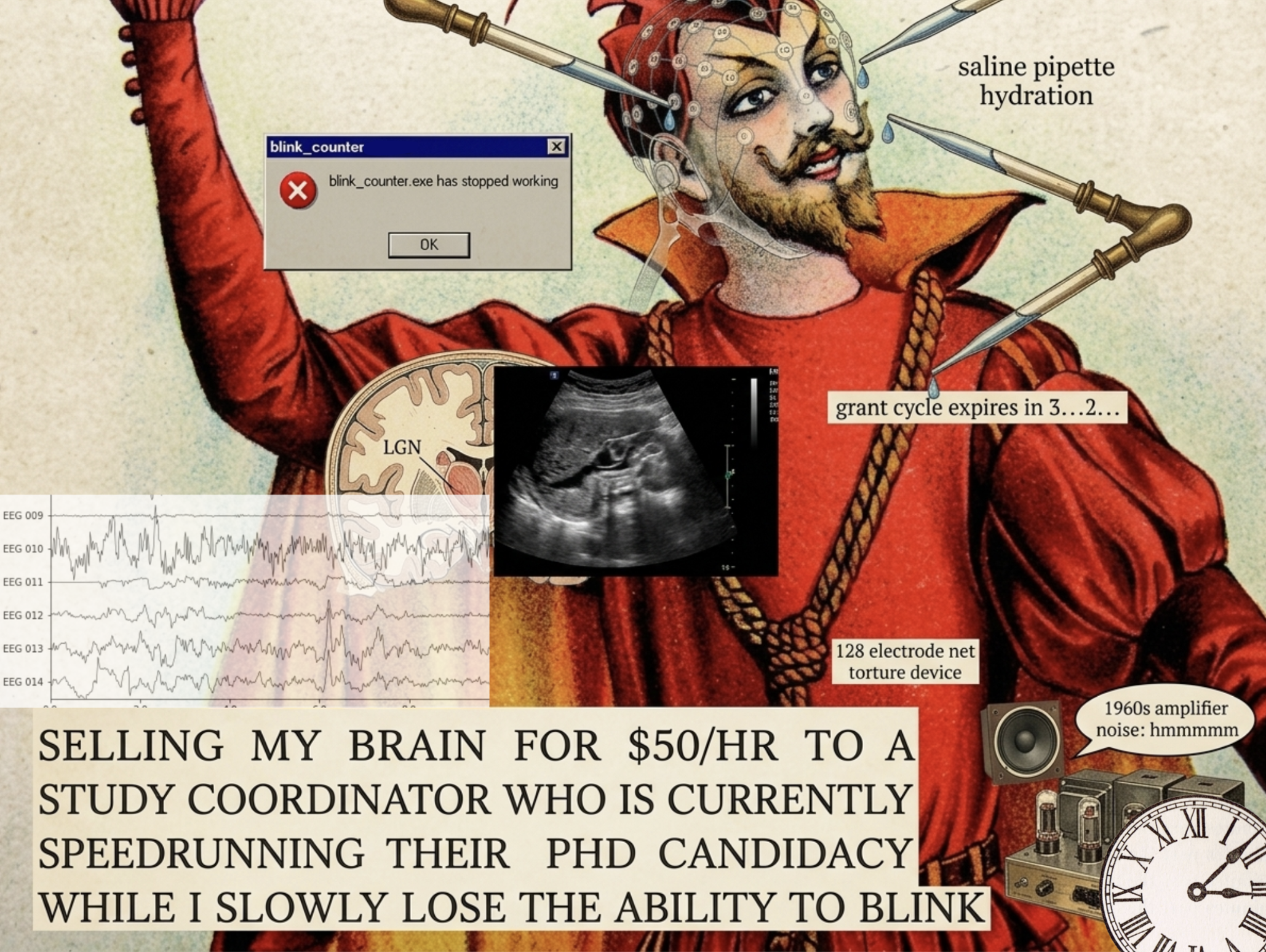
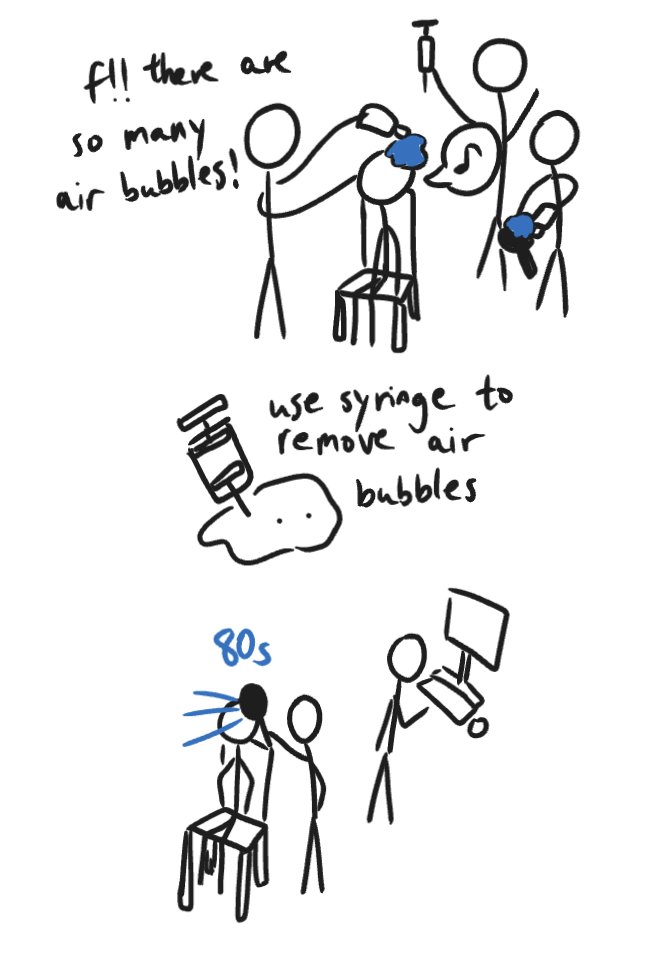
A high density EEG system was used in the 3rd study. Researchers used a 128 electrode cap and injected saline water into the electrodes with a pipette.
The baseline data collection involved a task that minimizes blinking with intermittent free-blinking breaks. This was subjectively painful. The research team was evidently speedrunning the study and was under immense pressure; The PI was considering skipping the lab meeting, offering me a chai latte.
Then there was the gold cup electrodes for recording during the task; My scalp was prepped with abrasive scrub to remove deadskin and gel for the gold. Three electrodes, blue, red, orange, were placed on the back of my head (ground, reference, signal) with several other electrodes. The gold electrodes are more conductive but are paired with an amplifier from the 1960s i.e. Grass technologies, which kept the noise in the data. This is contrasted with the other 128-electrode system that used an EGI amplifier from the 2010s with noise filtering.
Memory tasks were given in a screen usually involving a fixation cross in the center, and then a mirrored setup: The screen was divided into left, right, top and bottom regions where the stimuli could occur. Only one side of my brain was stimulated.
4.2The subtle and region-sensitive subjective experiences of FUS
4.2The subtle and region-sensitive subjective experiences of FUS
It felt like being lightly zapped on the forehead. There was no temperature increase for more than 2 deg. Even though the transducer may be on for 40 mins, it is only operating at 10% duty cycle. The ultrasound was audible as it pulsed at designated frequencies: 5 Hz, 50 Hz and 500 Hz.
There were sham sessions which stimulated unrelated regions milimeters shallower/adjacent to targeted regions. For example in study #2, the focused ultrasound targeted the insula first in a later-revealed sham session, which may explain a reaction time speed up.
My reaction time became noticeably & marginally faster and working memory increased to my own peak performance point.
However, the memory task in study #2 was moderate difficulty. I had came up with a heuristic before stimulation by mentally drawing paths and noting dots around the monitor to get the right answer. After stimulation, I feel cognitively effortless and ditched the heuristic, and likely performed still the same in terms of measured results. In study #2's 2nd session, the pulvinar (correct region) got targeted. this is a coordinator nuclei in the thalamus for visual attention, processing and filtering. Subjectively, I registered no noticeable effect.
Wiggling. The ultrasound had to pass through milimetres to hit study #3's target region: the LGN, just as large as the beam's focus, buried deep inside the brain. While I accidentally wiggled in my chair, I felt a phantom cold sensation in my throat. I suspect my vagus nerve was stimulated by accident through the incident beam. "Can focused ultrasound intentionally cause cognitive impairment?", @FemboyEE asked. This is practically demonstrated to be quite likely using present day set ups.
4.3Surprises in focused ultrasound
4.3Surprises in focused ultrasound
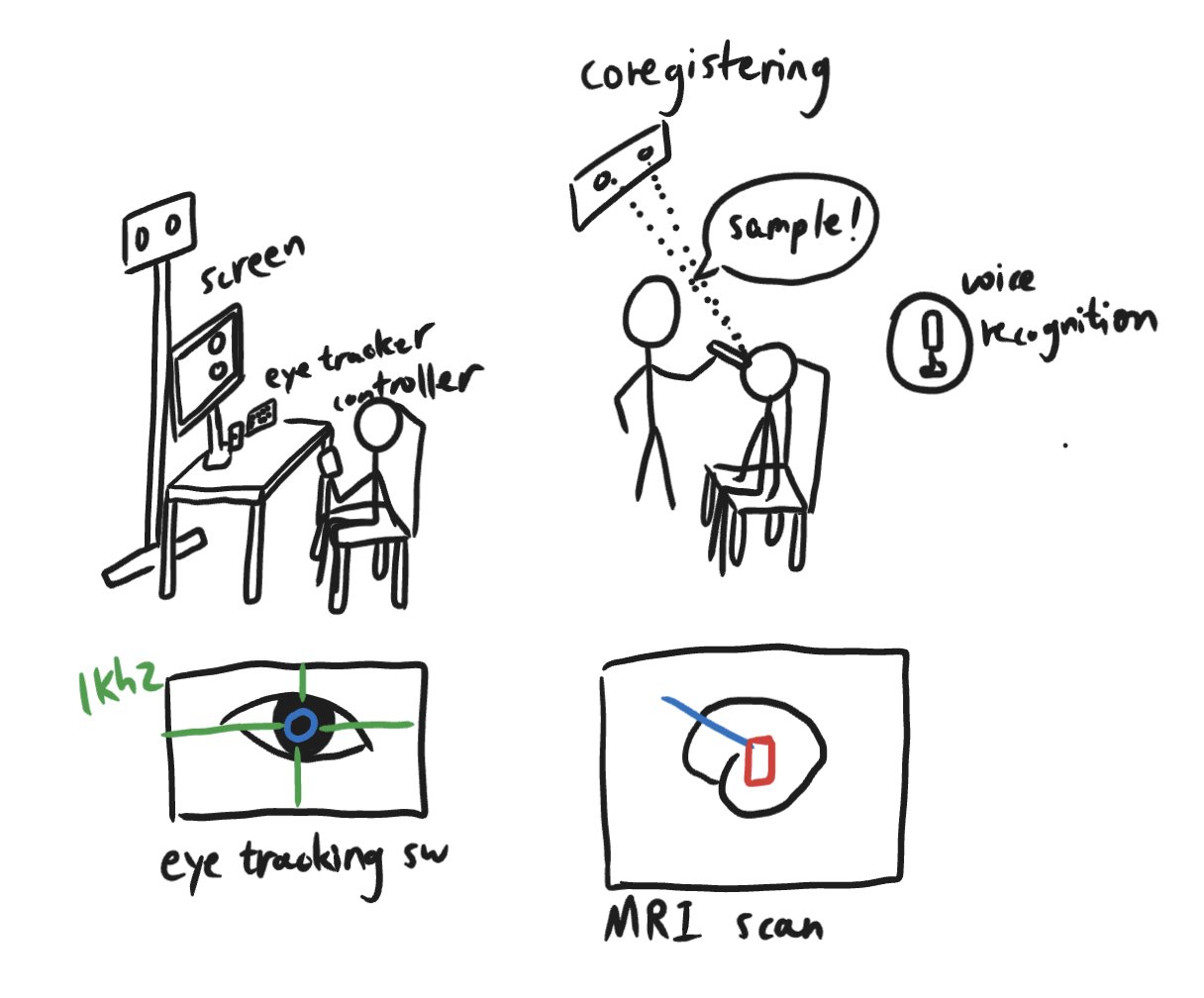
Manual transducer placement was the bottleneck in this study, taking 15 mins on average. Robotic arms are developed for TMS coils e.g. Axilum robotics, but could not generalize to the coregisteration step. Narrow robotics applications emerge frequently. 6 DOF arms like the LeRobot SO-101s are everywhere, one can vibecode a hello world to move all the servos in 10 mins, its a race to generalize as of 2026.
Algernon-Gordon effects remain unstudied. The postdocs weren't sure about how the focused ultrasound stimulation decays as a function of time, since they're focused on the what.
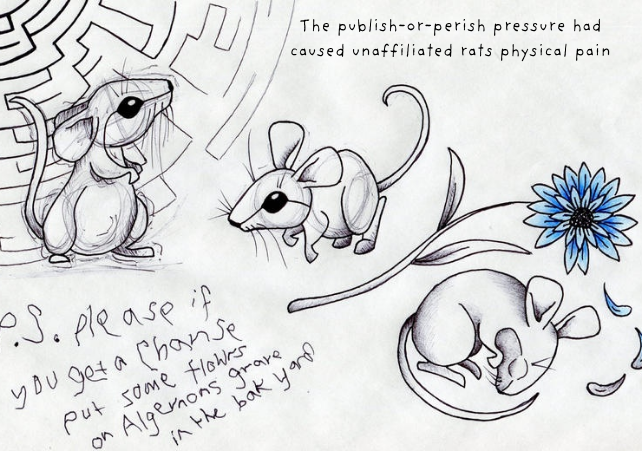
Institutional arbitrage. The study coordinator mentioned skipping their masters and directly going to a PhD program. Thus they needed to publish papers via a coordinator role. As it is currently May, I think the team was under immense pressure to finish the study before major deadlines. The publish-or-perish pressure had caused me, an outsider, physical pain.
Mistakes are more information than correct results. Through analyzing types of errors made at each stage in study #2 (directing + suppressing attention and manipulating information) among at least 30 participants, researchers could infer the ultrasound effects.
4.4Computing pendulum
4.4Computing pendulum
Computing history has moved from large, centralized mainframes to distributed PCs back to the centralized cloud, followed by distributed local models so the models within the same enterprise can communicate quickly with each other. There appears to be a current swing in computing to specialization, evident in various GPUs, ASICs and aforementioned local models. At the Founders Inc.'s Physical AI hackathon this past weekend, people toasted bread and set tables with robotic arms. One team found it easy to drop bread into the toaster, but harder to "push down the toasting button" to refine the toaster pipeline. In robotics, the pendulum seems to be swinging towards generalization.
"Software ate the world". AI eats software. Hardware increases in relevance.
In an assembly line, whether in the cafeteria or in software, having the best people at the start is important. Shift left.
I noticed I had been combinatorially testing code. Combinatorial testing could not grow at Moore's law's rates.
RAM shortage expected to last until late 2027, reflected in the current silicon stock market trend. Fabs are being built/infrastructure is built from ground-up. Cerebras IPO! Cerebras is coming to IEEE @ Stanford May 18th.
4.5Hackathon meta
4.5Hackathon meta
-
Many companies have policies sponsoring only top-tier hackathons with famous people or large prize pools. If you do want to organize a hackathon, start from having interesting people as the base layer. This goes for seeding social networks in general.
-
A Unitree partner was kicked out of the hackathon venue, since they weren't sponsoring any APIs, prize money more than displaying a robotic dog. An employee was treated as a cog. Unitree's robotic dog wasn't technologically groundbreaking, however, the co-organizing company in this hackathon is just remixing the LeRobot arm. If everyone is repackaging existing open-source systems, the social norm shifts towards gatekeeping rather than creation. This is like how the DJ culture is a bit cold since people're remixing music that is publically accessible, compared to the ML research scene where there are thinking moats.
-
Technical skills are often the entry ticket, systems-thinking skills are differentiators. In the NeurotechX Hackathon at Frontier Tower, Sharena Rice shared a systems account of failure modes in neurotech. Individuals with deep expertise get stuck in neurotech with no authority or decision-making patterns. My friend and I discussed that after ~Jul 2025, people purely focusing on technical skills are kind of having a challenging time.
-
One of the hackathon participants tracked neurotech funding via IBIS World, cold emailed accordingly and secured an internship.
4.6Also reading
4.6Also reading
Permutation City. First impressions: Its 2050 homogenous-earth timeline seem to closely echo late 2020s San Francisco in a heterogenously developing world. It gets AI, VR systems that we have now, but not yet any mind upload. Also, the characters are major procrastinators and heavily use coercion.
Cybersentics book club — Sentics was the proto-cognitive science in the 1950s. There was 7 universal emotions across cultures, measured with pressure of the tip of the finger when a stimuli is shown. It resembled a crude version of EEG waveforms. Composer's typical musical forms correlated to sentics. There are many well-thought out discussion questions by the host, Anastasia Chernysheva. I would recommend going to these book clubs.