Big social problems
Big social problems
Social problems I've looked into during high school
Problem 1Food expiration date labels (memo) [note-0017]
Problem 1Food expiration date labels (memo) [note-0017]
by: Saeed Tamboli, Juky Chen Wei Ling, noesis • 2022-10-23
💡 Problem statement: Food labels are wildly inaccurate - The labels are meant to portray when the product is at its peak of freshness, not when it goes bad. Due to this misconception over 90% of Americans throw out food prematurely.
Fundamental food handling inefficiencies cause hunger
Our world is only getting bigger, and that means that we have more and more mouths to feed. If we want to ensure that everyone is able to have the basic necessities to survive we can’t be wasting our food. Food waste is becoming a nearly billion ton problem, with the United Nations Environment Programme's 2021 Food Waste Index stating that an estimated 931 million tonnes of food is thrown away each year. One major contributing factor for wastage of food within the United States, 3rd largest food wasted, are misleading expiration dates.
Facts for context
- A full third of the food produced in the U.S. is wasted due to consumers’ confusion over labeling
- This problem is only getting worse with Harvard Food Law and the Natural Resources Defense Council referring to date labels as “a key cause of the high and rising rates of waste in the United States”.
- Walmart surveyed its private label suppliers and found that they were using as many as 47 different kinds of date labels.
- The main cause of this is because the companies don’t benefit from making the labels clearer. If the consumer eats the food by that time on the label then they have the best experience possible thus increasing the likelihood of them re-purchasing their product OR if the consumer throws it out then they are inclined to re-purchase the product and make more money.
The outcomes
- By only preventing waste of meat alone, of the 263 million tonnes of meat produced globally, over 20% is lost or wasted, we can prevent 60 million tonnes of meat going to waste.
- If we expand to more food items we can save over 130 billion meals and more than $408 billion each year within the United States alone.
- We can also save more water, land, labor, and energy thus leading to a lower carbon footprint. It also reduces the amount of greenhouse gasses produced, with Municipal solid waste landfill accounting for approximately 14.1 percent greenhouse gasses in america.
• • •
Key innovations allow for new change
- Paper-based microfluidics is the branch of microfluidics involving devices made out of paper, or other porous membranes, that wick fluids by capillary action. Paper-based microfluidic devices have several advantages over conventional microfluidic devices including simpler fabrication, lower cost, easier disposal, and the ability to operate without pumps or other supporting equipment.
- Microfluidic system. Locates pathogen by allowing its growth (over multiple hours) that triggers a dye. Best works with liquids such as milk.
- Electrochemical Biosensors detect compounds that are associated with bacteria.
- MIT has found silk based and edible sensors effective for solid foods (meat, vegetables etc.). Still requires ~16 hrs to make a prediction using microneedles and bioinks.
- Bioink responds to pH changes associated with bacteria spoilage.
Four barriers to viability
- These colourimetric sensors are not yet mass produced due to an unoptimized manufacturing process.
- In particular, there is no standardization of indicator spots. Most existing ones can only be comprehended by academics.
- There is also limited integration with existing food packaging.
- Limited products have been tested.
• • •
🎯 Our solution: Give consumers stickers they can put on the food to determine whether decay has occurred. Companies would also place these stickers into their meat products.
Visualizing bacteria byproducts to indicate spoiling
- Bacteria breed on the meat surface, leaving gaseous by-products called Volatile Organic Compounds. This has two stages: First, bacteria break down sugar in the process of catabolism to release alcohol and acids. This lowers the meat’s initially-neutral pH value.
- Next, when the sugar is depleted, bacteria attack proteins and release amines and thiols.
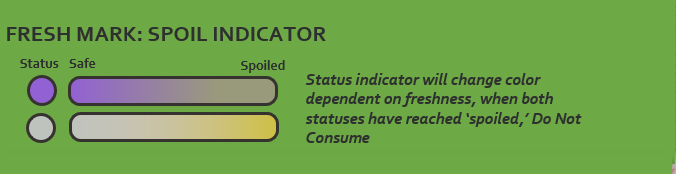
- There is one circle to indicate the progress within each stage, respectively.
- These circles are created by hole-punching Color Catchers, which are papers capable of absorbing run-off colors immediately, into 2 small circles. (Diameter = 0.4cm).
- Circle #1 is immersed in bromocresol purple (BCP) for 2h. It changes from purple to yellow as the pH decreases from 7.5 to 5.5.
- Circle #2 is immersed into ellman’s reagent. It turns yellow to reflect the amount of thiols. They are left to dry for 24 hours.
- Both circles are placed onto the tape to adhere to the meat.
Achieving economic viability by catering to all stakeholders
- Since most companies benefit from the food waste. However, if companies are able to implement this then they will have a marketing edge over their customers and be associated with a higher quality and more responsible product..
- There is also an incentive for the government to pass legislation to implement this solution universally since it would allow for less money to be spent on garbage disposal and management. Additionally redistribution of possibly wasted food alleviates food security costs e.g. food banks etc.
- There is a consumer based incentive to transfer over to clearer labels as consumers lose out financially to wasted food that they've bought. This also has an economic benefit on companies who may be prompted by demand posed by consumers.
Problem 2Low quality education in Africa (memo) [note-0029]
Problem 2Low quality education in Africa (memo) [note-0029]
by: Aayush Grover, Surya Sure, noesis • 2022-11-20
Problem 3UN Environmental Programme challenge submission (top 5 out of 40) [note-0043]
Problem 3UN Environmental Programme challenge submission (top 5 out of 40) [note-0043]
by: Aditya Mahes, Noorish Rizvi, Shirley Yang, noesis • 2022-03-24
My team's submission to the United Nations Environmental Programme challenge got top 5 out of 40 competing teams. It was an intense few weeks gathering data, outreaching to experts, resolving team conflicts and prepping for AP exams. Our deliverable is a 27-page slide deck
Problem 4Notes on Senior loneliness in North America and companion robots [note-0049]
Problem 4Notes on Senior loneliness in North America and companion robots [note-0049]
by noesis, contributors Colyi Chen and Elena Mishina • 2023-04-14
I looked into senior loneliness, conducted in-person interviews in Waterloo, Canada and pitched the research at a Chinese conference informally, mentioned on technologist Yuquan Wang's podcast. 2023 fall: I wasn't very satisfied with breaking down the problem by personal vs environmental causes. Later I realized social problems often have feedback loops that makes MECE analyses insufficient.

 1. Team: Created by Japanese engineer Takanori Shibata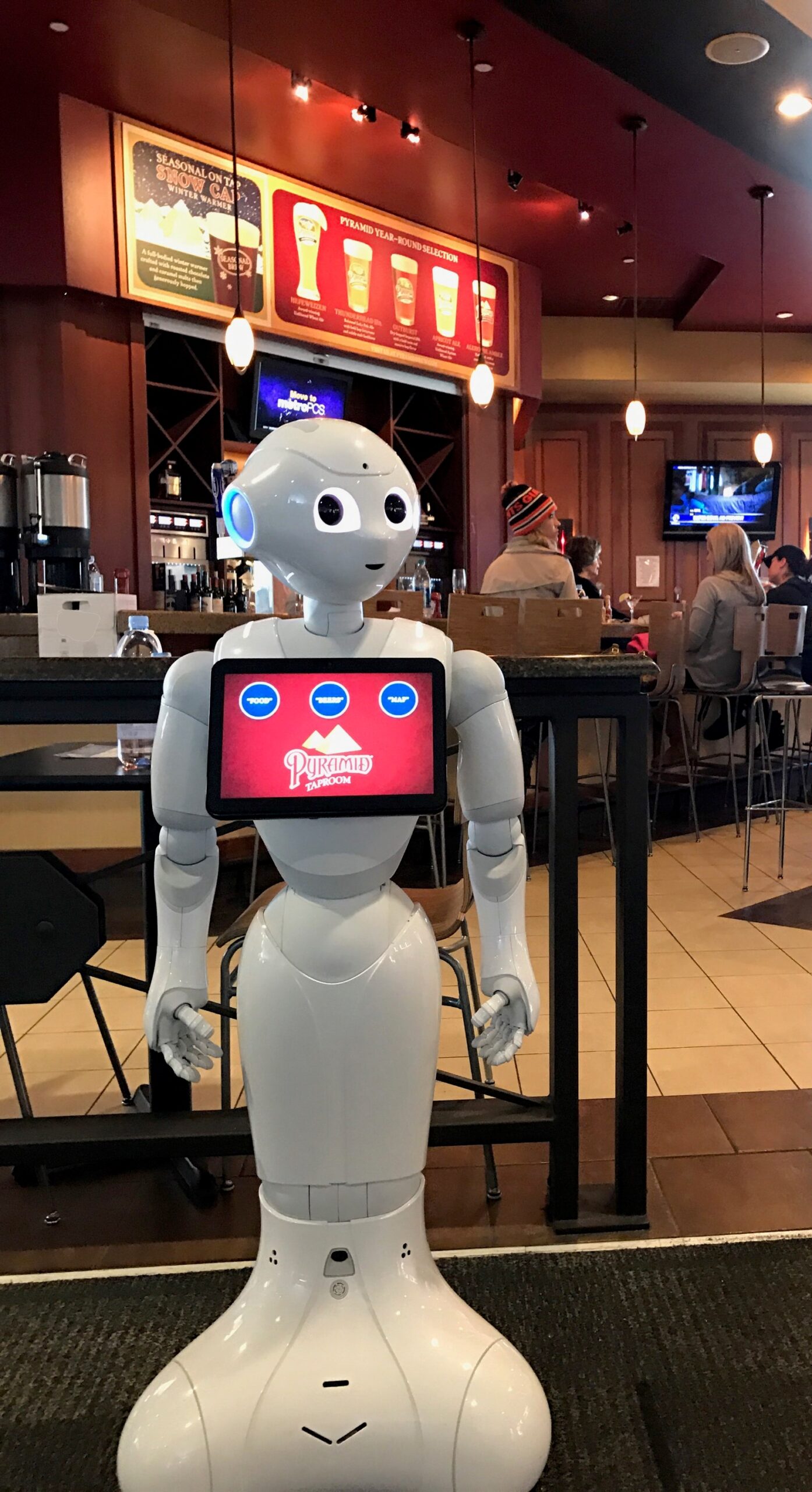
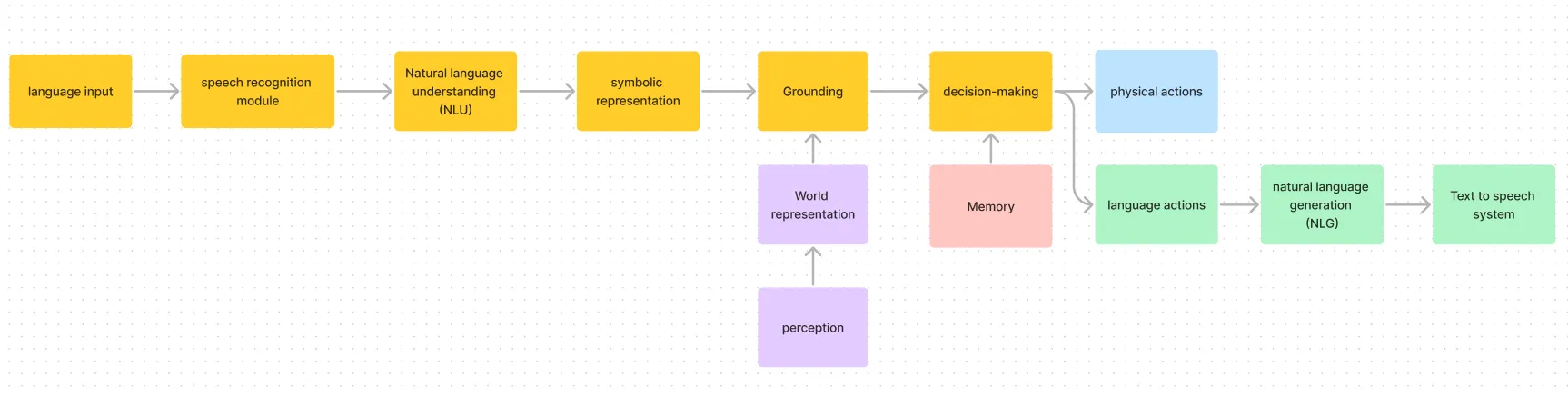 The speech recognition module generates several hypotheses of the uttered phrase ranked in terms of confidence in the N-best algorithm. Text from the first-best is passed into the Natural Language Understanding (NLU) system into symbolic language. e.g. ``a red cup = cup(x) ^ red(x)``. While not every robot converts to symbolic language, social robots which rely on advanced logic would use both first-order predicate logic and temporal logic, e.g. grabApple = False and becomes ``True`` later to reflect the changes across time.
Problem 5Domestic violence statistics [note-0062]
Problem 5Domestic violence statistics [note-0062]
compiled in 45 minutes.
He holds me after breaking me, whispering that he never meant to, as if his regret could unmake the ruins of me. I wonder how much blood a body can lose before it stops calling itself alive.
1 in 3 women and 1 in 4 men have experienced some form of physical violence by an intimate partner. This includes a range of behaviours, including light as pushing, shoving, and slapping. In some cases, this might not be considered "domestic violence." 1 in 7 women and 1 in 25 men have been injured by an intimate partner.
Estimates published by the World Health organization indicate that globally about 1 in 3 (30%) of women worldwide have been subjected to either physical and/or sexual intimate partner violence or non-partner sexual violence in their lifetime.
Nearly 20 people/minute are physically abused by an intimate partner in the United States. During one year, this adds up to more than 10 million women and men.
More than one in six married women in each country that was studied reported being pushed, shaken, slapped, or targeted with a thrown object by their male partners. At least one in 10 has been threatened or publicly humiliated by their husbands. 42% of women who experience intimate partner violence reporting an injury as a consequence of this violence.
Country-specific
The percentages of women who said an intimate partner had ever abused them ranged from 48 percent in Zambia and 44 percent in Colombia to 18 percent in Cambodia and 19 percent in India. (A 1998 Commonwealth Fund study put levels of similar violence in the United States at 31 percent).
Impact on children
- Almost one-third of children in low-income and lower-middle-income countries have been exposed to IPV (intimate partner) in their lifetime
- Children who grow up in families where there is violence may suffer a range of behavioural and emotional disturbances. These can also be associated with perpetrating or experiencing violence later in life.
- Intimate partner violence has also been associated with higher rates of infant and child mortality and morbidity (through, for example diarrhoeal disease or malnutrition and lower immunization rates).
Problem 6Food waste - The overstocking problem (memo) [note-0040]
Problem 6Food waste - The overstocking problem (memo) [note-0040]
💡 Problem Statement: $50 billion dollars are lost each year in the US due to the overstocking problem. The surplus of goods without corresponding demand results in food wastage.